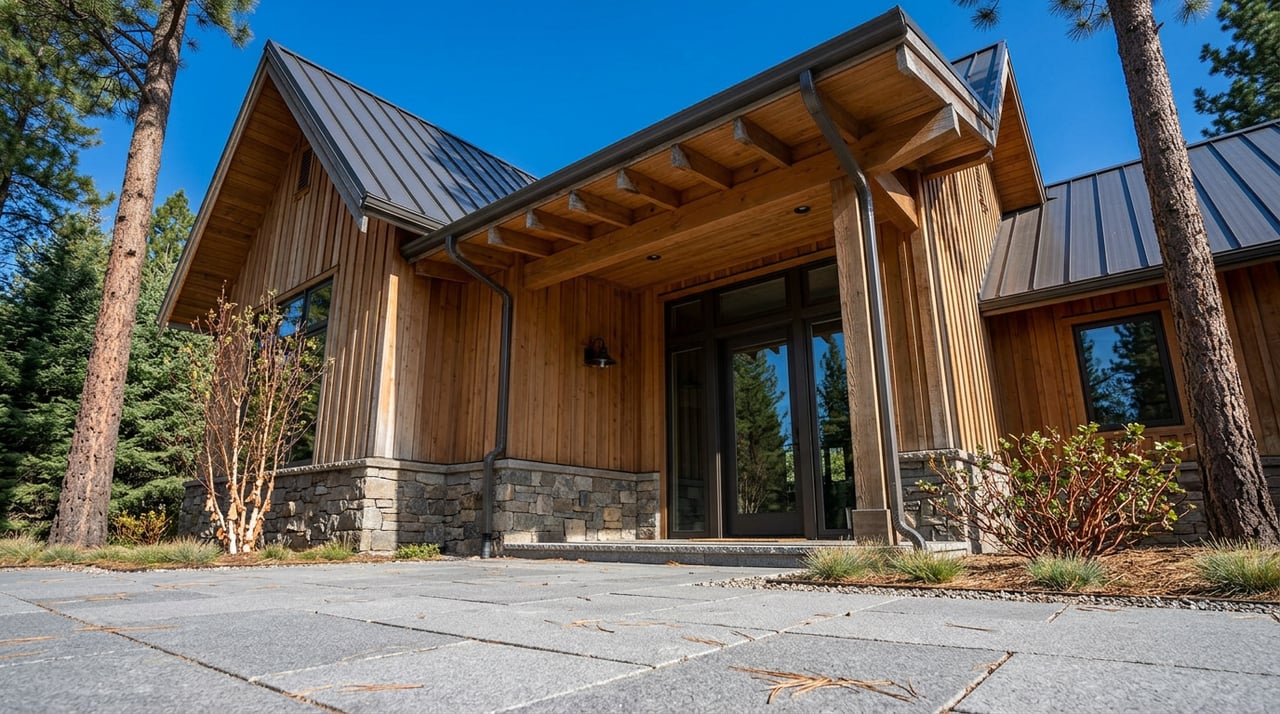
Picture two homes on the same block in Al Tahoe. Same square footage, same year built, same distance to the lake. One has an active Vacation Home Rental permit. The other doesn't. Earlier this year, that difference came down to a measuring tape: whether a neighbor within 150 feet had gotten there first. As of April 23, 2026, the tape is gone. What replaced it is a number that behaves nothing like a buffer, and it changes how you should underwrite a short-term rental purchase in this city.
South Lake Tahoe's new Vacation Home Rental ordinance, adopted on a 3-2 council vote on March 24, 2026 and effective a month later, is being described in most coverage as deregulation. The 150-foot spacing rule that disqualified hundreds of otherwise eligible homes is gone. Condos can now apply. That reads like the door swung open. It did, for some streets. But the ordinance also installed a hard ceiling of 900 permits in residential zones, and a ceiling behaves differently than a spacing rule. A buffer only ever blocked your specific lot. A cap blocks new permits in residential zones the moment the count hits 900. The eligibility test now turns on the residential-zone permit count the city tracks on a public map, rather than on a neighboring VHR's location.
What the Council Actually Traded
Under the ordinance that took effect in July 2025, single-family VHRs outside the Tourist Core had to sit at least 150 feet from another permitted VHR. The Tahoe Daily Tribune reported that by the March 10, 2026 council meeting, that rule had already produced a specific number: 382 permits issued in residential areas, against 291 denied applications, most of them killed by the buffer rather than by anything about the property itself. Mayor Pro Tem Keith Roberts, who ultimately voted to remove the spacing rule, said his opposition to the buffer stemmed from the fact that the city hadn't come close to the roughly 1,200 permits the program was projected to allow. The council voted to strip the buffer out and replace it with a 900-permit cap instead, a change councilmember Heather Horgan characterized as a meaningful reduction from the prior program's 1,400-permit ceiling for VHRs outside the Tourist Core.
Not everyone agreed the trade was worth making. Councilmember Scott Robbins voted no, warning the council it was "a one-way step into a system that only a court order would reverse." Mayor Cody Bass, who also voted against the amendment, made a separate point worth sitting with if you're evaluating a purchase: a short-term rental permit isn't a right that comes with the deed. "You did not buy the right to have an overnight rental," he told the council, a reminder that zoning, not the title, decides whether the house in front of you can legally operate as a rental at all.
The Permit Doesn't Follow the House
This is the detail that catches buyers off guard, and it's the one worth checking before you write an offer. The city's amendment clarified that permit transfers are restricted to a narrow exception: an owner can move a permit into a family trust for estate planning purposes if they remain a trustee. Outside that carve-out, a VHR permit doesn't ride along with a standard sale. If you're buying a home specifically because it has an active permit, confirm with the city what happens to that permit at closing, because the presence of a permit today is not the same as a guarantee it survives a change of ownership tomorrow.
That single mechanism is why the cap matters more than the buffer removal for anyone running numbers on a purchase. A residential-zone home without an active permit right now is competing for a shrinking pool of the 900 slots. A home that already holds one, and can retain it, carries a scarcity value that didn't exist under the old buffer system, where in theory any qualifying lot 150 feet from a rival could eventually get in. Once the cap fills, that math changes for good.
Where the Rule Change Actually Helps
The buffer removal is real and it does unlock genuine new inventory, just not evenly. Neighborhoods like Al Tahoe and Bijou, which are dense enough that the old 150-foot spacing rule effectively locked out entire blocks once one home got permitted, are now back in play. Attached condominiums are eligible too, provided the HOA doesn't prohibit short-term use, which opens up buildings in the Tahoe Keys and mid-market properties elsewhere in the city that the pre-2026 rules mostly excluded. Read the CC&Rs before you assume a building qualifies. Some Keys associations already restrict short-term rentals regardless of what the city allows.
There's a second exemption that matters even more for due diligence: commercial and recreational zones aren't subject to the 900-permit cap at all. Properties near the Tourist Core and Ski Run fall under different rules tied to the Tourist Core Area Plan. Two houses can look identical on a listing sheet, and one can be racing a citywide ceiling while the other faces no cap whatsoever, purely because of which side of a zoning line it sits on. Checking a property's zone through the city's Plan Area Map is now as material to an STR purchase decision as checking square footage.
How South Lake Tahoe's Deal Compares to the Rest of the Basin
The cap-and-buffer trade isn't unique to South Lake Tahoe as a concept, but the arrangements differ by jurisdiction, and the differences tell you something about how tight each market already is.
| Jurisdiction | Cap structure | Status as of mid-2026 |
|---|---|---|
| City of South Lake Tahoe | 900-permit cap, residential zones only | 382 issued as of March 10, 2026, before the new window opened |
| Placer County (North Shore, part of West Shore) | Permit cap | 3,511 issued as of June 1, 2026 |
| Truckee (Nevada County) | Permit cap | |
| Douglas County, NV (Stateline, Zephyr Cove, Glenbrook) | Permit cap for Tahoe Township, with density limits by neighborhood |
The tax side tells a similar story about how each jurisdiction has chosen to balance tourism revenue against resident concerns. South Lake Tahoe, Placer County and Washoe County charge a Transient Occupancy Tax on short-term rental revenue. If you're comparing an STR purchase across the lake rather than just across town, it's worth modeling the tax side before you compare cap rates across county lines.
What This Means for an Actual Offer
The practical shift is this. Before April 23, a scarcity premium existed for homes lucky enough to clear the 150-foot buffer. After April 23, that specific premium mostly evaporates, because the buffer is gone and many previously blocked homes are now eligible. But a new, harder scarcity is forming behind it, tied to a citywide count rather than a neighbor's address. If you're underwriting a residential-zone property right now, the questions that matter aren't about spacing anymore. They're about where the permit count stood the last time the city updated its public map, whether the property is inside or outside the 900-permit zone entirely, and whether an existing permit, if the home has one, can actually make it through a sale intact.
For buyers weighing a Tahoe Keys condo, an Al Tahoe single-family home, or something closer to Ski Run's Tourist Core exemption, the zoning line matters more than it used to, and it's the kind of detail that's easy to miss scrolling through listing photos. If you're comparing what your money buys across South Lake Tahoe's neighborhoods more broadly, our Tahoe Keys waterfront versus off-water breakdown covers how location within the Keys itself changes both lifestyle and rental math.
Frequently Asked Questions
Does an existing VHR permit transfer to me when I buy a house that already has one? Not automatically. The city's ordinance restricts transfers to a family trust exception for estate planning. Outside that, a change of ownership generally requires a fresh application, so confirm the permit's status with the city before assuming it conveys.
What if the property I want sits in a commercial or recreational zone instead of residential? It isn't subject to the 900-permit cap at all. Those zones fall under separate rules tied to the Tourist Core Area Plan, which can make them a meaningfully different bet than a residential-zone home competing for a capped slot.
Rules like these shift the moment a council votes, and permit counts move every quarter. If you're evaluating a South Lake Tahoe property with rental income in mind, Mountain Luxury Properties can walk the current zoning and permit picture with you before you write an offer. Book a private consultation and we'll pull the specifics for the exact address you're considering.
This article is general information, not legal, tax or financial advice. Consult a qualified professional about your situation.